From Frustration to Innovation: Ex-Firefighter's Breakthrough Saves Homes from Wildfires
Mark Whaling and his team sped back and forth over a hill in a fuel tanker while fighting a wildfire in Los Angeles County, hurriedly trying to collect water from a roadside hydrant to keep pace with the advancing fire creeping up the slope.
A helicopter came to release water, yet it needed to travel far for refilling. Consequently, a fire that could have been contained ended up destroying houses.
As they battled the inferno of the early 2000s, Whaling claims he noticed a closed-off water tank in the vicinity that firefighters He found it absurd that he had no means of gaining access.
"We don't instruct fire trucks to 'Defend the city and locate your own water.' Instead, we install fire hydrants approximately every 600 feet (182 meters) throughout urban areas," stated Whaling, who has now retired from the county fire department.
However, regarding the helicopters, our support was not as strong as it ought to have been.
His irritation ignited a concept: the Heli-Hydrant—a fairly compact, open reservoir designed to quickly load water. This allows helicopters to refuel more swiftly for city blazes instead of having to travel long distances to remote bodies of water like lakes or ponds.
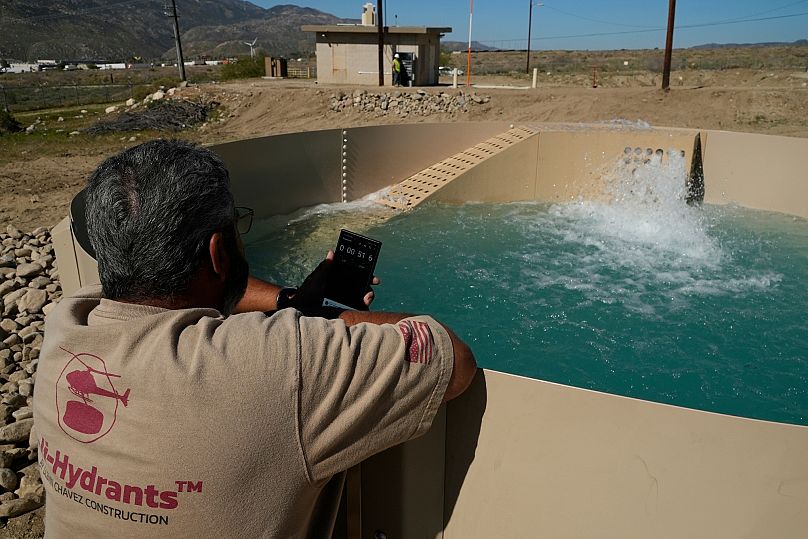
With wildfires occurring more often, Whaling's creation is attracting interest from authorities looking to enhance their readiness. Initially deployed during the 2020 Blue Ridge Fire in Yorba Linda, ten Heli-Hydrants have been constructed throughout Southern California, with sixteen additional units currently under development, as reported by Whaling.
Helicopters are essential for firefighting They can release approximately 3,785 liters of water at one time—some even carry significantly more. This capacity greatly exceeds what typical firefighting hoses deliver simultaneously and proves to be highly effective for tackling blazes that are hard for ground teams to access.
However, pilots occasionally must travel great distances to collect water, and in regions prone to droughts, natural resources may become depleted or reduced, making them difficult to access. In Riverside County of Southern California, helicopters have been required to fly as far as approximately 16 kilometers to locate water, thus consuming precious time needed for firefighting efforts.
Heli-Hydrants: An innovative solution
At a distant site in the southern Californian town of Cabazon, contractor Glenn Chavez was perched atop a ladder, looking inside an abandoned Heli-Hydrant. Holding a radio, he pressed a button to start the system, observing as water surged into the reservoir. Within approximately six minutes, it had accumulated 32,176 liters of water.
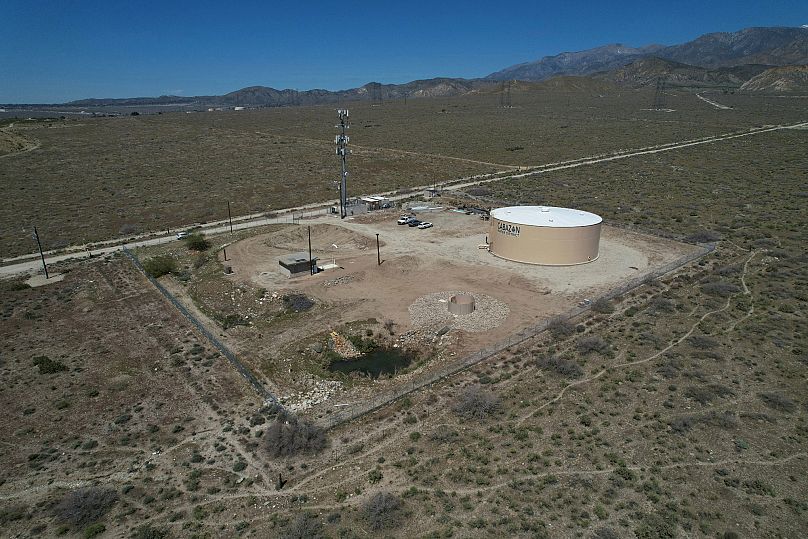
Chavez, a general contractor, was assessing the Cabaron Water District’s most recent purchase — another Heli-Hydrant that local authorities believe will aid in safeguarding the community. Priced at $300,000 (€265,000), this equipment comes with a cost comparable to just under the typical price tag for a standalone house in Cabazon.
Being part of a stunning desert community comes with the risk of wildfires," stated Michael Pollack, who serves as the district's general manager. "Having these Heli-Hydrants represents a significant benefit. It offers residents some peace of mind, providing them with an additional resource to combat fires locally.
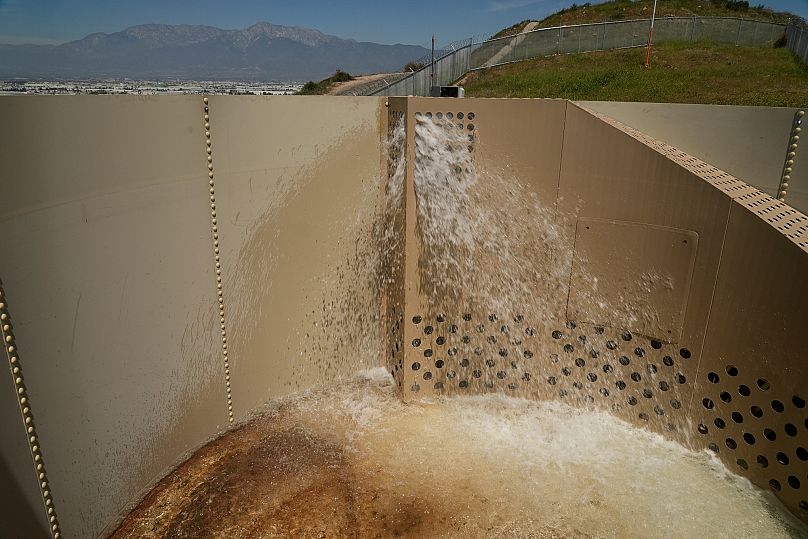
Pilots have the capability to trigger the activation of these tanks from as far as half a mile distant, after which they generally refill swiftly using water supplied by the municipal infrastructure. In fact, helicopters require only about one minute for refilling processes. Upon initiation, both solar panels and auxiliary battery systems maintain functionality even when electrical grids experience interruptions. Additionally, illumination provided by lanterns affixed atop the tank along with those situated on an adjacent tower facilitate pilot navigation towards the station during nighttime operations.
In November, firefighters in San Diego got their chance to try out the product during the 19.5-hectare Garden Fire in Fallbrook, an area famous for its avocado orchards. This led to evacuation orders and alerts being issued. The helicopters made use of the tank around 40 times throughout this incident.
Pilot Ben Brown stated that its closeness to the fire conserved both time and fuel.
They are ideal for situations where alternative water sources are unavailable," he stated. "Having more dipping locations, particularly in the drier areas of the county, would be beneficial.
The Heli-Hydrants aren't always able to assist.
Heli-Hydrants have sparked certain worries regarding their positioning within city environments where homes, structures, and electrical wires could pose challenges for helicopter flights and may require navigating through more confined zones.
In such instances, firefighters might opt to travel further to reach a natural water source where the helicopter has ample space, explained Warren Voth, a deputy pilot with the San Diego County Sheriff’s Department. The primary objective for pilots is to consistently align themselves against the wind when approaching and leaving an area, ensuring safety, which requires sufficient clearance to execute effectively.
During certain situations, particularly large-scale fires, the local supply systems required for refilling Heli-Hydrants might run out of water. Throughout the duration of the Palisades Fire in Los Angeles, three sizable storage tanks with capacities close to 3.8 million liters each—which were crucial for maintaining pressure at urban fire hydrants within the Pacific Palisades—were depleted due to heightened usage and leaks from damaged pipelines caused by the blaze.
At other times, helicopters simply cannot reach these areas. Strong gusts make flying extremely difficult; conditions worsened by hurricane-force winds that intensified the situation. Los Angeles infernos Initially designed for aerial firefighting operations, these aircraft start with ground-based support. In cases where numerous helicopters tackle extensive fires, not all of them can utilize the Heli-Hydration system due to operational constraints. Additionally, dense smoke often hinders visibility, making it difficult to locate and use this equipment effectively.
Mobile water tanks can achieve many of the tasks handled by Heli-Hydrants; however, they might necessitate additional setup time, personnel, and machinery.
A Heli-Hydrant offers one community optimism.
Regions where natural vegetation meets urban development have historically been susceptible to wildfires, yet nowadays an increasing number of people reside in such areas. Climate change is giving rise to circumstances This could lead to these areas becoming drier and more prone to catching fire.
Jake Wiley has seen intensifying wildfires destroy his neighborhood. Two fires in 2007 and 2017 together burned over 400 buildings in San Diego. The latter blaze compelled Wiley, who currently serves as general manager for the Rainbow Municipal Water District, to flee.
The fire led local organizations to install a Heli-Hydrant, which significantly contributed to assisting firefighters during the Garden Fire in November as they worked to safeguard homes.
It appears that even after witnessing the worst, there's still more to come," Wiley stated. "Whatever assistance we can provide makes a difference.

Post a Comment for "From Frustration to Innovation: Ex-Firefighter's Breakthrough Saves Homes from Wildfires"